
By Derek Lutz, Chief Executive Officer Lean Six Search Group
Let’s start with a truth most companies don’t want to admit: if your entire executive team lives in the same city, works in the same office, went to similar schools, and drinks the same overpriced cold brew, you're not building a leadership team. You're building an echo chamber with wifi.
That might’ve worked in 1998.
But not today.
In a world where customers are global, supply chains span continents, and your next competitor is being built in a garage in Nairobi, a centralized executive team isn’t just outdated, it’s dangerous. It creates blind spots, slows innovation, and breeds a kind of comfort that has no place in competitive business. In Singapore, Nick Aoun and I met a global CPO of one of the world's largest companies, and we learned about their top executives being spread across the globe, purposefully. It resonated closely with me.
At Lean Six Search and Bottle Rocket, we learned this the hard way and then made it our strength. In the early days, like a lot of companies, we defaulted to what we knew: hiring close to home, building leadership teams in the same city, the same coffee shops, the same steakhouses, the same gyms. It felt efficient. Familiar. Easier to manage.
However, over time, we began to hit the same wall: recycled thinking. Group bias. Blind spots. We were looking at global problems through a local lens, and it showed. Our results were solid, but not exceptional. And in this game, “solid” doesn’t cut it.
Then we made the shift. Slowly at first. We brought in people from Cape Town, Bogotá, Dubai, and Hong Kong. We stopped worrying about who could make the Friday happy hour and started caring about who could see things we couldn’t. It wasn’t smooth. It wasn’t easy. Time zones clashed. Communication got messy. But the ideas? Sharper. The thinking? More layered. The delivery? Next-level.
That’s when it clicked: our distance was our advantage. The cultural contrast, the friction, and the diversity of thought became our competitive weapon. We don’t pretend to have it all figured out. But we’ve seen what happens when you stop building for convenience and start building for impact. That’s when the real magic begins.
The Myth of the Head Office Braintrust
For years, "head office" was synonymous with power, strategy, and control. It was the place where decisions were made, where meetings happened, and where the people who "really knew what was going on" sat in their corner offices and signed off on everything... the beloved top-floor mentality, where everyone strived to be.
It was also, let's be honest, where egos gathered like static electricity.
But here's the thing: the head office doesn’t hold the monopoly on wisdom. In fact, it often strangles it. Real insight doesn’t come from fluorescent boardrooms. It comes from being in the field, talking to clients, hiring talent in different markets, and seeing how people live and work, not just reading about it in a report.
That’s why, when we built Lean Six and later Bottle Rocket, we never centralized power. We decentralized it... on purpose.
Today, we have team members across Canada, the US, the UK, Colombia, Thailand, the UAE, South Africa, and Hong Kong with ideas to expand even further. Our clients are spread across over 55 countries, so centralizing our team really doesn't make much sense. Our leadership team isn’t parked in one timezone. They’re operating globally with radically different perspectives, cultural insights, and approaches.
And that’s not just by design. It’s by necessity. We have a system to lead and deliver from anywhere.
Real Companies Think Like Cities, Not Silos
Great cities work because they’re messy.
They don’t apologize for the noise, the contrast, or the chaos; they thrive on it. Walk through New York or Tokyo or Istanbul and you’ll feel it: cultures colliding, opinions clashing, people building, failing, trying again, all at once. That’s what makes cities vibrant. That’s what drives creativity. That’s what creates edge.
A great executive team works the same damn way.
You don’t need seven clones in Patagonia vests nodding politely in a boardroom. You need friction. You need someone who sees the world through a completely different lens; who wasn’t on the same Zoom, doesn’t read the same blogs, and doesn’t give a shit about sounding agreeable.
You need someone who challenges your thinking, who calls out when your pitch won’t land in EMEA or when your comp model doesn’t reflect realities in Asia. You need tension. Not hostility, productive tension. That’s how real decisions get made. When someone from Bogotá stops you mid-call and asks, “Have you even considered how this sounds outside North America?” Or when your Dubai lead shuts down a plan because, bluntly, it doesn’t work in the real world.
That’s the gold. That’s the good stuff.
And that’s exactly how we operate at Lean Six Search and Bottle Rocket.
This isn’t theory for me... It’s a lived experience. My experience spans from living in Vancouver for 8 years, Singapore for 4.5, Dubai for 2, Calgary for 3, Wellington for 1, and spending time in more world cities than I can count, from Lisbon to Ho Chi Minh, Nairobi to Medellín. I’ve sat across from CEOs in London and toured dusty industrial plants in the backroads of South India. I’ve had midnight calls with my team in South Africa and early morning brainstorms with recruiters in Thailand.
So when I’m in Singapore with one of our EMEA leads, calling someone in San Diego to talk about a role in Sweden, I don’t get caught up in the time zones or titles — I get excited. Because that’s when I know we’re doing something right. We’re not tethered to a building. We’re not operating from a playbook written in 2010. We’re connected to the work. We’re connected to the world.
The companies that will win, truly win, are the ones who build like great cities: Layered. Diverse. Resilient. Messy. Alive.
So ask yourself: Are you still trying to lead from a silo... or are you ready to think like a city?
Decentralization Isn’t Chaos, It’s Clarity
A lot of people confuse decentralization with disorganization. They imagine a Wild West of Slack channels and time zones. But when done right, decentralization brings more clarity than any boardroom ever could.
Why? Because it forces you to trust your people.
It forces you to hire leaders, not just “managers who can follow instructions.” It demands process, communication, and alignment... not through control, but through purpose.
Our Head of Global Delivery is based in Mexico. Our EMEA & APAC Head is based in Dubai. Our LATAM Director is in Colombia. Our US business is run from Canada. Our creative and branding team? Scattered, in the best way, from Caracas to Dubai to Cape Town to Mexico City.
What ties us together isn't geography. It is alignment on mission, values, and performance. Everyone knows what great looks like. And they’re empowered to get there in their own way.
That’s not chaos. That’s freedom with discipline.
Diversity Isn’t a Checkbox, It’s a Competitive Weapon
Let’s get one thing straight: we don’t talk about diversity like it’s some feel-good HR initiative. This isn’t about optics. It’s about outcomes.
Diversity (real diversity) is a strategic imperative. It’s how you win. Because when your leadership team comes from different backgrounds, culturally, professionally, and geographically, you don’t just get better representation. You get better ideas. Sharper instincts. More layered thinking. You stop solving problems in a vacuum, and you start seeing around corners.
Our team in Colombia doesn’t think like our team in the UAE... and that’s the whole point. They speak to different candidates, in different languages, with different lived realities. They spot different red flags. They propose different solutions. They see the same brief from different angles, and that makes our delivery smarter, faster, and more human.
A few folks in our team grew up in small-town Canada, the kind of place where you learn work ethic from shoveling snow at 6 am and community means everyone knows your business before you do. They are not flashy, nor loud. But they understand people and resilience in a way no textbook ever could. They know what it’s like to be underestimated and know how to spot someone quietly exceptional from a mile away.
Another one of our researchers built her career in Cape Town, navigating a talent market shaped by inequality, volatility, and fierce ambition. She’s street-smart, sharp as hell, and brings a level of instinct that you just can’t teach. Then there’s our Latam group, precision-driven, analytical, with a knack for uncovering patterns and risks before they become problems. They see the macro. The other two see the micro. Together? They’re dangerous in the best way.
Put them on a Global VP Supply Chain search, and you don’t just get a shortlist. You get a perspective. You get tension, debate, triangulated insight, and the kind of internal challenge that sharpens the outcome. They’ll tear a profile apart if it’s fluff. They’ll fight for a wildcard candidate if they see something others missed. And they’ll deliver the kind of result that looks effortless, but only because it came from three very different minds pulling from three very different lives.
This isn’t cookie-cutter recruitment. This is lived experience, turning into a competitive advantage. That’s what creates nuance. That’s what allows us to fill the roles others keep failing to close. Because we’re not recycling the same stale playbook from the same echo chamber of candidates. We’re playing a bigger game, across borders, languages, and industries.
And let’s be honest: if your client base is global but your leadership team is 100% local, what are you really offering? You’re walking into a knife fight with a spoon. Because today’s problems are global. Supply chains don’t respect borders. Consumer behavior doesn’t follow your timezone. Talent doesn’t sit in one city anymore.
So, if your executive team still does?
You’re already behind.
You Can’t Build a Global Business With a Local Mindset
We live in a world where borders are blurred. Talent is mobile. Work is remote. And yet so many executive teams still operate like it’s 2010, centralized, static, and slow. But at Lean Six and Bottle Rocket, we’re proving something different.
We’re showing that you can scale a global business with no traditional head office, no “command center,” and no need to force everyone into the same box. You can build everywhere if you trust the process and hire right.
And the best part? It’s more fun.
There’s something thrilling about waking up to a Slack message from someone in a city you’ve never visited, with a perspective you hadn’t thought of, and a candidate that might be the perfect fit. That’s what the future of leadership looks like.
The New HQ Is Wherever the Work Happens
The ivory tower is crumbling...and not a moment too soon.
For too long, companies built their power structures like cathedrals: polished, insular, top-down. All the decision-makers in one room. All the same schools, same golf clubs, same safe conversations echoing off glass boardroom walls. It felt efficient. It felt impressive. But it was never built for the chaos of today’s market.
Now? That model’s dead. If you’re still building your leadership team within four walls and a shared parking lot, you’re not running a company; you’re clinging to a museum piece.
The truth is, the best executive teams today don’t look like a photograph from last quarter’s off-site. They don’t sit in the same zip code, speak in corporate clichés, or build consensus just to feel like they’re aligned. They argue. They push. They come from different industries, time zones, passports, and pain points. And because of that, they see more, move faster, and build smarter.
Your CFO might be in Chicago, your Head of Ops in Geneva, and your CHRO pulling 3 am shifts in Seoul. But if they’re aligned on mission and ruthless about execution, that’s not fragmentation; that’s power. That’s velocity. That’s the future.
At Lean Six Search | Supply Chain Recruitment and Bottle Rocket Search | Coworking & Flex Space Recruitment, we built our leadership across continents, not because it looks cool on a slide deck, but because it works. Because it brings tension, challenge, and perspective. Because it lets us punch above our weight in rooms where people didn’t even know our names.
And guess what? We like it that way.
So if you're still trying to build your exec team inside arm’s reach, ask yourself: Are you building a business for today… or preserving a comfort zone from yesterday? The future isn’t centralized. The future is everywhere. And the new headquarters? It's wherever the real work happens.
Build a team that reflects the world you want to win in. Hire across borders. Think across disciplines. Operate without limits.
We are. And we’re just getting started.
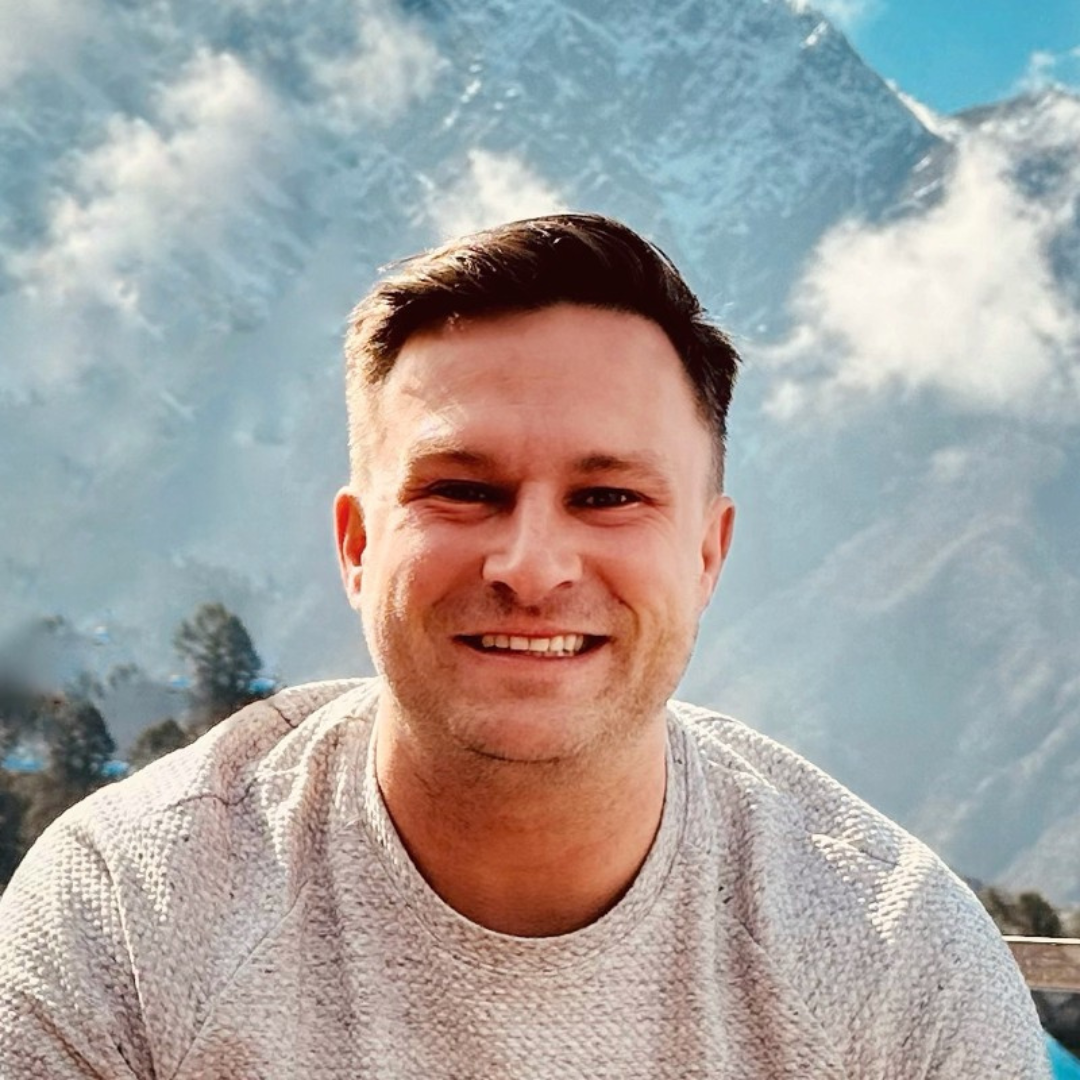
About Derek Lutz (Chief Executive Officer)
He is a full-time traveler, investor, and business owner who thrives on helping others succeed. He runs Bottle Rocket Search | Coworking & Flex Space Recruitment, Lean Six Search | Supply Chain Recruitment. When he's not doing that, he's writing, traveling, exercising, and trying to experience all the world has to offer.