
The brutal reality of supply chain leadership (Amazon, SpaceX, 3M)
Torsten Pilz, former Chief Supply Chain Officer at Honeywell and leader at Amazon and SpaceX, joins Derek Lutz to discuss why technical expertise is secondary to systemic leadership. Discover why the next era of supply chain demands emotional calmness, financial literacy, and a h

In the season two premiere of Link by Link, Derek Lutz, CEO of Lean Six Search, sits down with Torsten Pilz to strip back the corporate gloss and discuss what truly separates elite supply chain performance from the merely successful.
Drawing from his time in the leadership trenches at Amazon, SpaceX, and Honeywell, Torsten explores the emotional and intellectual evolution required to lead at the highest levels. This conversation moves beyond traditional silos, offering a masterclass in systemic thinking, the "loneliness" of structural accountability, and why the next era of supply chain, defined by AI and real-time orchestration, will demand a complete rewiring of leadership judgment.
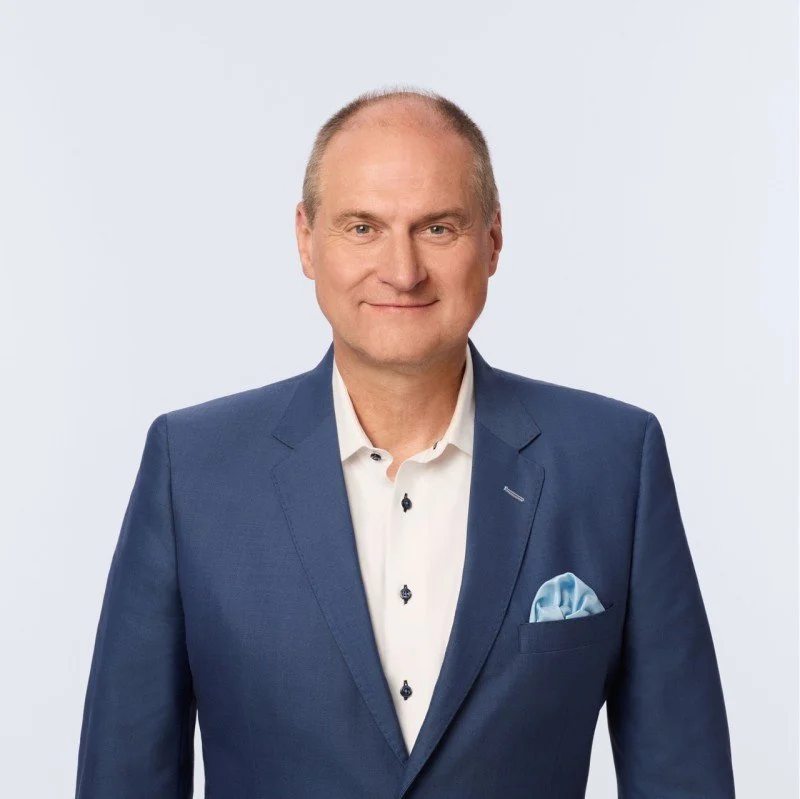
Torsten Pilz is a world-renowned operations executive and the Founder of Counterpoint Labs, a tech firm dedicated to rewiring supply chains for the AI era. With a career defined by leadership roles at some of the world's most innovative "machines", including serving as Chief Supply Chain Officer at Honeywell, and holding senior leadership positions at Amazon and SpaceX, Torsten has mastered the art of scaling complex architectures in hyper-growth environments.
A chemical engineer by training, he has spent decades navigating the tension between technical engineering excellence and the "stubbornly real" outcomes of global supply chain management. Today, he is a leading voice on the integration of human judgment with autonomous technology, advocating for a shift toward real-time, touchless supply chain orchestration
Defining Greatness & The Cost of Scale
Derek Lutz: You’ve operated inside some of the most admired machines in modern history, Amazon, SpaceX, Honeywell. If we strip it all back, what separates the great from the merely successful in supply chain?
Torsten Pilz: There is no generic answer because you must understand the specific value drivers of the environment you are in. At SpaceX, the supply chain must keep up with innovation speed where changes happen while the rockets are being built. At Amazon, it is about relentless customer obsession and driving scale. Greatness comes from finding a system that supports the unique needs of that specific business.
Derek Lutz: Which of these environments nearly broke you?
Torsten Pilz: At Amazon, the pressure isn’t episodic; it’s constant, structural, and institutional. You feel capable and insufficient at the same time. It taught me a level of emotional calmness, learning to compartmentalize pressure so your brain works on the solution rather than agonizing over the problem.
The Realities of C-Suite Leadership
Derek Lutz: What kind of supply chain leadership is the loneliest when the board wants blood?
Torsten Pilz: The loneliness comes when you have to tell the truth in a boardroom that makes everyone very quiet. Supply chain outcomes are "stubbornly real" and least deniable, revenue can be managed, but supply chain failures are visible. You have to be the person to say, "This isn't a quarterly problem; it's a structural failure, and the fix will hurt before it helps". If you avoid conflict, this job is not for you.
Derek Lutz: If you walked into a broken mid-market company today, what’s the first brutal truth you’d tell them?
Torsten Pilz: Most companies blame the ERP, the data, or the systems. They spend years implementing new software, but it ends up being the same dysfunction running on newer code. The real issue is almost always leadership. Planning processes often exist to create the appearance of planning rather than to drive actual decisions.
Career Advice & Executive Credibility
Derek Lutz: How does a rising leader earn a seat at the executive table and actually belong there?
Torsten Pilz: You must learn to think outside your direct function. Supply chain leaders are often operationally fluent but financially illiterate. You need to learn the language of the CFO, P&L and capital, to understand how they think. Additionally, you need "scar tissue". Executives don’t have all the answers; they have developed tested judgment through experience.
Derek Lutz: What kills credibility instantly when you are sizing someone up?
Torsten Pilz: Making things up or trying to confuse people with complexity to hide a lack of detail. I also look for the "capability-to-ego ratio," something I learned from Elon Musk. You want to be off the charts on capability and very low on ego; that is the winning combination.
The Future: AI & Systems Engineering
Derek Lutz: How will AI change the next wave of supply chain leadership?
Torsten Pilz: We are moving toward a touchless, seamless supply chain that runs in real-time rather than monthly buckets. The last 25 years were about functional optimization, logistics optimizing logistics, procurement optimizing procurement. That is becoming irrelevant. The future leader is an orchestrator who understands how the entire machine works as a system. If you are behind on this technology now, you will never catch up because the knowledge gain is exponential.
Listen to the full conversation with Torsten Pilz and explore our previous editions on Spotify.