
Building the Plane While Flying It & The Art of Non-Linear Scaling
Serial entrepreneur and former Nasdaq-listed CEO Tyler Robson joins Derek Lutz on Link by Link to break down the realities of building high-growth CPG and cannabis platforms from the ground up. From bypassing commoditization and managing half-billion-dollar P&Ls to hiring for cul

In this episode of Link by Link, host Derek Lutz sits down with serial entrepreneur, investor, and former Nasdaq-listed executive Tyler Robson. Having scaled organizations from scrappy early-stage setups to managing half-billion-dollar P&Ls and thousands of employees across global markets, Tyler brings a raw, grounded perspective on what it truly takes to build a business. In this candid conversation, Derek and Tyler explore the sharp contrast between boardroom theory and real-world execution, why non-linear problem solving is essential in emerging categories, and how leaders can maintain operational control without stifling entrepreneurial hustle.
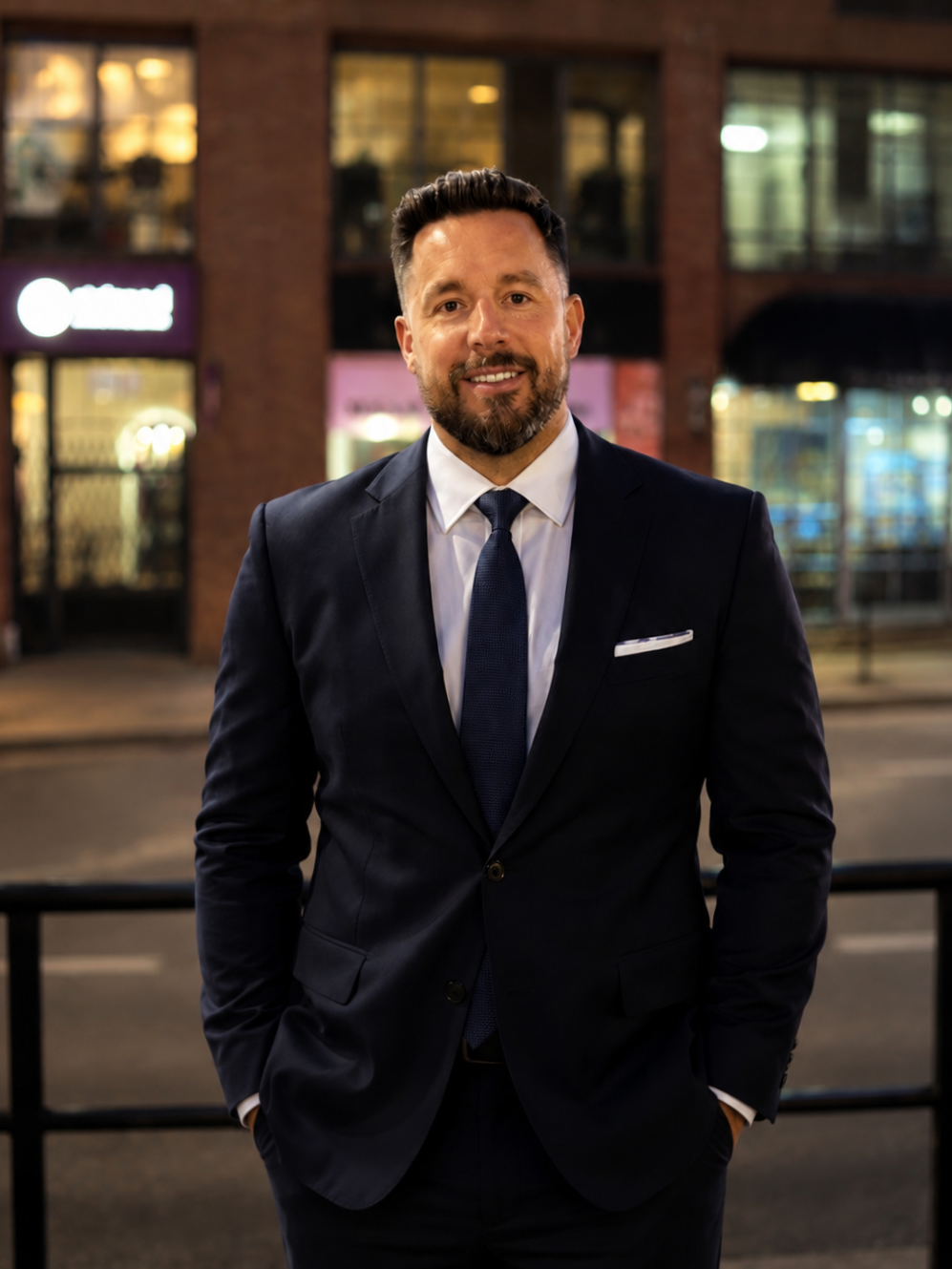
Named one of Canada’s Top 40 Under 40, Tyler Robson is an entrepreneur and operator with a track record of building, scaling, and transforming high-growth businesses.
A former C-level executive of two Nasdaq-listed companies, Tyler served as CEO of The Valens Company, helping build the organization into a leading cannabis platform with an expanding global distribution footprint, ultimately culminating in its acquisition by SNDL. At SNDL, Tyler went on to oversee an approximately half-billion-dollar P&L, with responsibility spanning large-scale operations, retail, and international growth.
Today, Tyler is an owner, investor, and advisor across consumer packaged goods, beverage, construction, real estate, agriculture, and emerging growth businesses, including OLE Cocktails, one of North America’s fastest-growing RTD beverage brands.
Building the Plane While Flying It: Boardroom vs. Real-World Execution
Derek Lutz: You’ve built businesses from the ground floor rather than just managing from the boardroom. When you look back, what do you understand about entrepreneurship that differs from standard MBA theory?
Tyler Robson: Nothing in real-world global supply chains is ever exactly as illustrated. Executive boardroom mindsets tend to move linearly, from point A to B to C. When you are building a high-growth business in real-time, it is completely non-linear. You go from A to F to W, and back to A again. You are building the airplane while flying it and solving complex problems on the fly with limited capital, high competition, and zero room for delay.
Anticipating Commoditization and Navigating Extreme Risk
Derek Lutz: Entrepreneurship requires living with real risk. What were some of the scariest moments in your career where failure was a very real possibility?
Tyler Robson: In the early days of Canadian cannabis, we applied for federally regulated product approval before the category was even fully legal. Health Canada was still building the regulatory framework, but we chose not to wait. Crucially, we made the strategic decision to bypass cultivation entirely because we foresaw that raw cultivation would commoditize far faster than the market admitted.
Raising capital for a model that traditional banks and investors didn't understand was nearly impossible. Over the years that followed, nearly two-thirds of Canadian bankruptcies were cannabis operators who got caught on the wrong side of that commoditization. Going against the grain was terrifying, but sticking to that core structural thesis proved to be the right move.
Scaling Infrastructure: Trust, Verification, and Operational Detail
Derek Lutz: What did scaling a company from 100 to 3,000 employees teach you that starting a business never could?
Tyler Robson: Moving from 100 to 400 people feels manageable, but jumping to 3,000 across multiple time zones and international facilities completely shifts the game. You are managing global supply chains where inventory can bloat overnight and agricultural assets age out in 30 to 90 days.
The primary rule I learned is to trust people, but verify everything. As an entrepreneur scaling a business, you cannot stop sweating the small stuff. The second you take your eyes off the puck on procurement, forecasting, and inventory levels, the complexity of a fast-moving market will cause you to lose control.
Executive Hiring: Moving Past Resumes to Hire Potential and Culture
Derek Lutz: When you build executive teams, what traits do you evaluate to ensure leaders can thrive in complex environments?
Tyler Robson: The biggest mistake I’ve made in my career was hiring strictly based on impressive resumes from big CPG companies. Managing an established legacy process is vastly different from building new systems under pressure.
You cannot teach culture, work ethic, or baseline demeanor. I look for high problem-solving abilities, emotional maturity, and individuals who have faced adversity—such as former athletes who understand what it feels like to lose, push through, and persevere. Most importantly, you need people who can laugh and maintain perspective when things are falling apart, rather than overcomplicating the problem.
Listen to the full episode with Tyler Robson on Spotify to explore non-linear growth, executive problem solving, and building resilient businesses.